
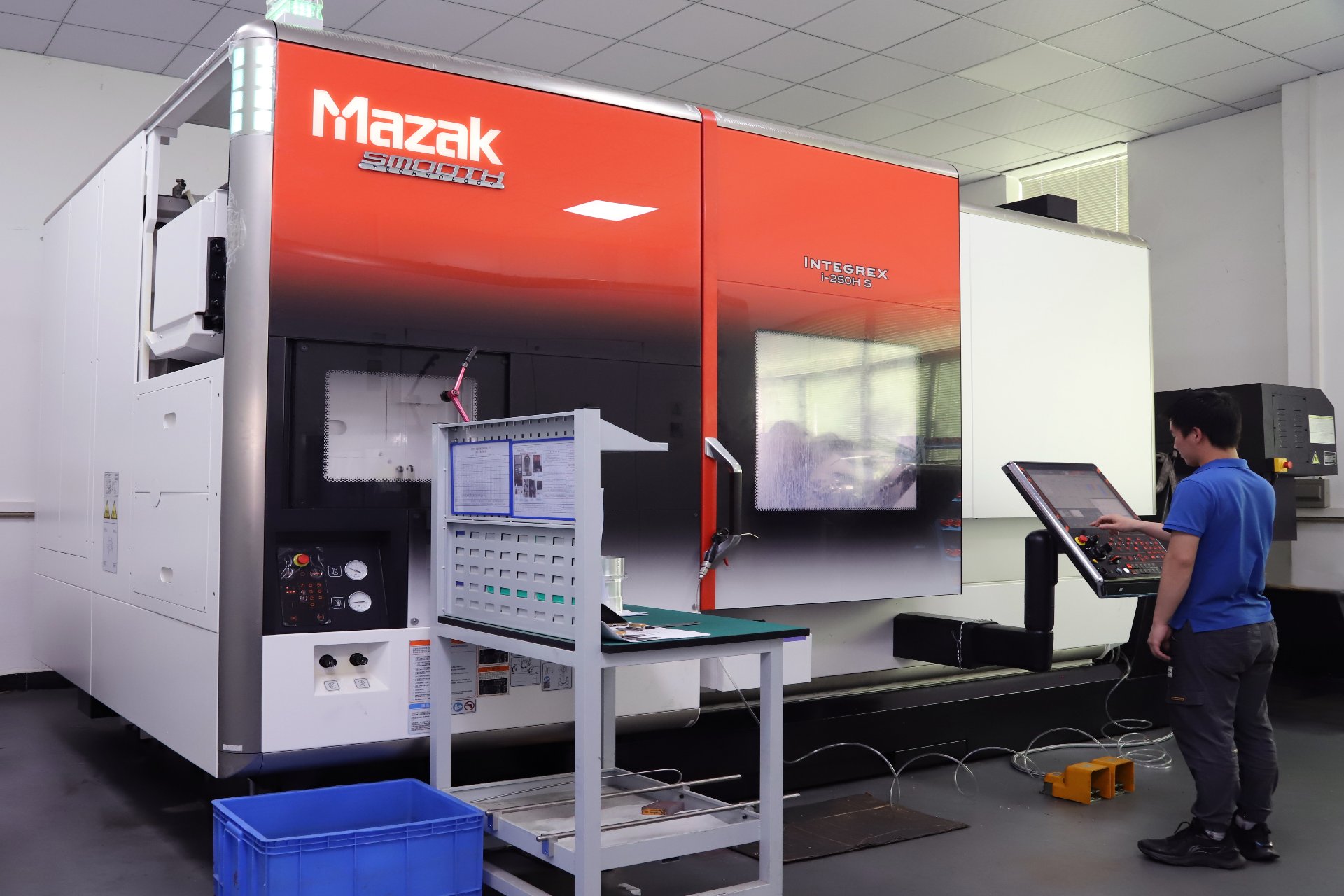
Qualifying a machining company for production is a different exercise from buying a prototype, because the questions change from can you make one to can you make ten thousand the same, prove it every lot, and hold the program when something drifts. The answers live in the supplier’s systems more than in its promises: process capability at Ppk ≥ 1.67 initial on the criticals, controlled purchasing with material verified on receipt, calibrated instruments with a schedule behind them, and documentation that links each lot to its drawing revision and its heat. A machining company that runs those systems can carry a production program; one that improvises them cannot. This guide walks the qualification layer by layer, from the first audit to the third lot.
- Production asks for systems: repeatable capability, controlled purchasing, calibration, and documentation, not promises.
- Capability is the currency: Ppk ≥ 1.67 initial on the criticals, demonstrated across lots rather than claimed on one.
- Material control is a process: certificates verified on receipt, heats linked to lots, and no silent substitution.
- Documents are the memory: the system that produced the first lot is the system that must survive the fiftieth.
- Scale by evidence: pilot lot, production lot, and audit follow in that order, each earned by the one before.
Why does qualifying for production need systems rather than promises?
A promise explains one part; a system explains a thousand. Production qualification is really an audit of systems: how the company plans the process, controls the material, calibrates the measurement, and records the result. The systems are what survive the tenth lot, the design change, and the auditor.
The distinction shows in a single question. Asked about a critical feature, a capable company answers with its capability data and its control plan; an improviser answers with reassurance. The answer is the difference between a process and a hope wearing a schedule.
The follow-up question is about the control plan: for the criticals on your drawing, what does the company measure, with what, and at what frequency? A plan that names the instruments and the cadence is a plan that can be audited.
Ask the same control-plan question about the coating and treatment steps if the program carries them, because a machining company that outsources its finishes inherits their control risk.
The audit also has to be fair: no company runs a perfect system on its first day, and the qualification should measure the trend - whether the systems are real and improving - rather than demand a museum of procedures.
The fair audit scores the systems on the floor, not the binder: whether the operator follows the plan, whether the inspector signs the record, and whether a deviation becomes a correction. That is the trend the second audit measures.
Which documents should the first audit request?
The first audit should ask for the documents a production program will live on: the quality manual or its equivalent, the control plan for the parts you will send, the calibration register with its dates, the material verification procedure, and a sample first-article report from a recent lot.
The documents should be readable as a chain: the drawing flows to the control plan, the control plan to the inspection record, and the inspection record back to the drawing revision. A company whose documents do not chain together has documents, not a system.
The chain should also carry dates and signatures, because a control plan without evidence of use is a decoration, and the audit should be able to walk from a signed record back to the plan that produced it.
Ask to see a non-conformance record and its corrective action as well. How a company handled its last mistake tells you more than how it describes its quality, because every production program will eventually produce a mistake.
Follow the record to its close: the corrective action should name the root cause and the change that prevents the repeat, because a corrective action that ends at "reminded the operator" is a record that will recur.
How do you verify process capability before committing a production order?
Process capability is verified with data, not with a sample. Ask the company to run a capability study on the criticals of a representative part - a batch measured in sequence, analysed for Cpk - and to show the result against the ≥ 1.67 expectation on the characteristics that matter.
Run the study on the features the drawing marks critical, not on the easy ones, because a company that shows capability on a clearance hole and hides the press-fit bore has shown you nothing.
The study should be repeated on the pilot lot of your own part, because capability is part-specific. A company that is capable on someone else’s bracket has not yet proven itself on yours, and the pilot capability is the number your production release is based on.
Watch the trend across the early lots rather than any single value. A Cpk that holds at 1.8 across three lots is a process; a Cpk that appears once and fades is a lucky batch, and the trend is what separates the two.
Keep the capability summaries lot by lot in a simple table, because the table is what makes the annual review a comparison instead of a recollection.
Share the summary with the supplier each year, because a company that sees its own trend line in writing is a company that can act on it before the audit does.
What does material control look like at production scale?
At production scale, material control is a process with a paper trail: the purchase order names the grade and the certificate requirement, the receipt verifies the stock against the certificate, and the heat number travels with the lot through the shop.
The verification method matters as much as the certificate. An XRF check on receipt catches a mislabelled bar before it becomes a thousand bad parts, and the check is cheap enough to be a habit rather than a special request.
Ask to see the XRF log from the last month: the entries show whether verification is routine or theatrical, and the difference is the risk you carry on every lot from that stock.
The log also shows the coverage: whether every heat that entered the shop was verified, or only the ones photographed for the audit. Coverage is the number that matters, and it is the number the audit should check first.
Substitution control is the quiet third leg: the company should have a rule that no grade is substituted without written approval, because a material switch that saves a week can cost a program its qualification data.
The rule should also name the evidence a substitution requires - the certificate, the capability re-check on the affected features, and the buyer’s written approval - so a fast switch cannot hide a weak one.
How should measurement and calibration be verified?
A production program lives on measurements, and measurements live on calibration. Ask for the calibration register and check that the instruments behind your criticals are in scope and in date, because a CMM that drifted out of calibration makes every report since its last check suspect.
The method should match the callout: sizes on the gauges the tolerances imply, form and position on the CMM against the datums, and roughness on a surface tester with a stated evaluation length. A company that names its methods can be audited; one that does not cannot.
The calibration dates should be checked against the production schedule too, because an instrument that is calibrated in February and used until the next February covers every lot in between, and the coverage is what the register proves.
Ask how measurement drift is handled when a reading sits near the tolerance edge. A company that re-measures, investigates, and records the borderline is running a measurement system; one that ships and hopes is running a number generator.
What should the pilot lot prove before the production order is released?
The pilot lot is the qualification test on your part. It should prove the capability of the criticals, the first article with its report, the material certificate for the heat used, and the documentation format that production lots will follow.
The pilot also proves the logistics: the packing, the freight, and the receiving side of your own dock. A part that is perfect in the report and damaged in the box has failed the pilot as surely as an out-of-tolerance diameter.
The pilot should also confirm the count and the labelling, because a production program that cannot reconcile the received quantity against the packing list inherits a counting problem that will surface at every shipment.
The pilot should be reviewed as a gate, not as an order to be expedited. When it passes, the production release is a decision supported by evidence; when it fails, the failure is cheaper here than at lot fifty.
Write the gate criteria before the pilot ships: what Cpk on which features, what first-article findings, what documentation. A gate with written criteria is a gate that cannot be argued at the moment of release, and one that can be checked without a phone call.
Include the calendar in the gate too: the release date that was agreed should be part of the criteria, because a pilot that passes on quality and misses the schedule has still failed the pilot for a program that runs on dates.
How do you structure the terms for a production relationship?
Production terms differ from prototype terms in duration and in the evidence they are tied to. A framework agreement with the quality clauses, the inspection frequency, and the change-control rule lives beside the individual orders, so every lot is released under the same rules.
The framework should also state the service levels that matter to production - lead time, on-time delivery, and response time to a question - because the quality clauses cover the part and the service clauses cover the program.
Agree how the service levels are measured as well, because an on-time delivery figure means nothing without a definition of the clock and the tolerance around it, and the definition belongs in the framework.
Payment can follow the same evidence-based logic at a larger scale: progress against the schedule with the release tied to the inspection data, and the change-control rule written so a design revision re-qualifies the affected features rather than restarting the program.
The change-control rule should also name who approves the change: the buyer for drawing changes, the supplier for process changes, and both for material changes, so the approval trail is never in doubt.
The audit clause belongs in the terms too: the right to audit the quality system, the calibration register, and the non-conformance records keeps the qualification current, because a company that is not audited drifts to the standard it is comfortable with.
How do you scale a machining company from pilot to full program?
Scaling is the qualification repeated at larger steps. The pilot lot proves the process on your part; the first production lot proves it at volume; the second proves the documentation holds; and the periodic audit proves the systems survived the pressure.
- Release in steps, not in one order. The pilot, the first lot, and the ramp each deserve their own gate.
- Compare capability across lots. The Cpk trend on the criticals is the early warning system of the program.
- Audit on a schedule, not on a crisis. The annual or semi-annual audit is what keeps the qualification current.
- Manage change through the rule. Drawing, material, and process changes re-qualify through the change-control clause.
- Keep the documents comparable. A report format that stays fixed across lots is a report you can read at a glance.
A machining company that passes the audit, demonstrates capability on your part, and holds it across the early lots is a company the program can grow on. The qualification is not a certificate on a wall; it is the accumulated evidence of the pilot, the lots, and the audits, and it is only as strong as its newest lot and its latest audit, both of which are yours to keep current.
That is also why the audit schedule matters: a program that stops auditing saves a little time and spends the qualification, because the systems drift toward whatever is comfortable until the next inspection finds them.
Frequently Asked Questions
What is the first thing to audit in a CNC machining company?
The documents that chain the drawing to the control plan, the control plan to the inspection record, and the inspection record back to the revision - plus the calibration register and a real non-conformance record.
How is process capability verified before a production order?
With a capability study on the criticals of a representative part, repeated on the pilot lot of your own part, and watched as a trend across the early lots rather than as a single value.
What should material control look like at production scale?
A process with a trail: purchase orders name the grade and certificate, receipt verifies the stock by XRF, heats travel with the lots, and no grade is substituted without written approval.
Why does the pilot lot matter for a production program?
It proves capability on your part, the first article, the material certificate, and the documentation format - and it proves the logistics, because a part perfect in the report and damaged in the box has failed the pilot.
How should payment and audits be structured for production?
A framework agreement with quality clauses and change control beside individual orders, evidence-based releases, and an audit right that keeps the qualification current.
How do I scale a machining company from a pilot to a program?
Release in steps with a gate at each one, compare capability across lots, audit on a schedule, manage change through the rule, and keep the document format fixed.
What happens when a design changes during production?
The change-control rule re-qualifies the affected features rather than restarting the program, with a fresh first article on what moved and the capability re-checked where the drawing changed.
Want a machining company qualified for your production program?
Send the part family and the volumes and ask for the audit documents, a capability study, and a pilot-lot plan before you commit. Contact the CNC Machining Company team to start the qualification.