
Medical CNC Machining Company Economics: When the Volume Arrives on a Regulatory Staircase
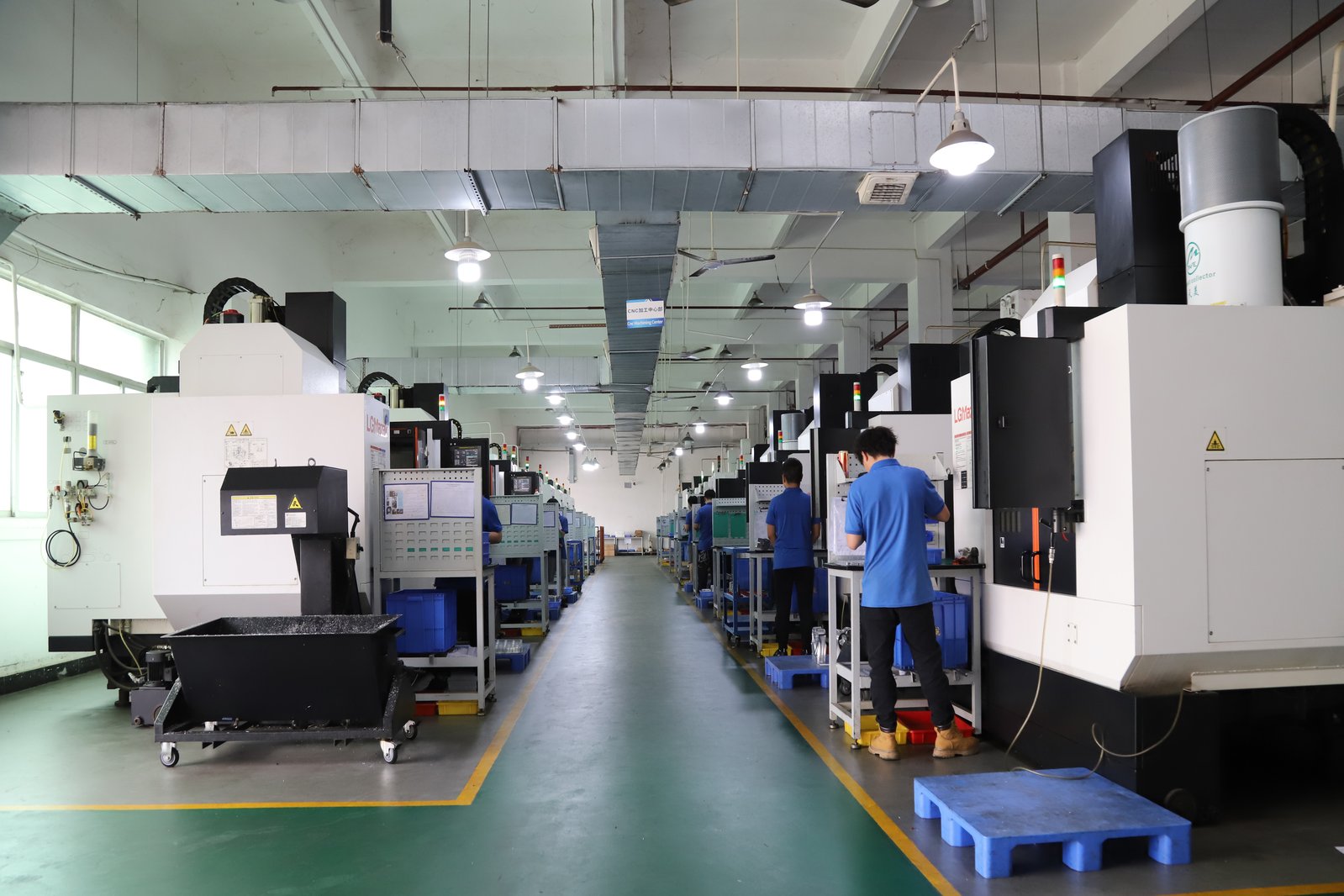
A medical machined part follows a cost curve that most buyers never see plotted, because the volume does not arrive as one smooth line. It arrives on a staircase: dozens of pieces for development and verification, a few hundred for clinical and launch batches, then commercial quantities that grow year by year — with each step gated by validation, documentation, and regulatory clearance. The fixed costs of medical machining — process validation, material and biocompatibility evidence, batch records, sterilization validation — are spent before the volume that would amortize them, which makes the first orders look expensive and the later ones look cheap for reasons that have nothing to do with the supplier's margin. This guide covers the volume economics of medical machining from the buyer's side: why the staircase exists, where the fixed costs sit, why the reorder after qualification changes the math, how a design change resets the clock, why even the smallest batch costs what it costs, and what to model before ordering parts on the way to volume.
Why does medical device volume arrive on a staircase rather than a curve?
The quantity trajectory of a medical part is fixed by regulatory gates, not by demand smoothing. A device in development needs machined components in prototype and verification quantities — tens of parts per revision. A device entering clinical use and initial launch needs hundreds. A device that clears its market reviews can then consume commercial quantities that accumulate year after year, but that final step is not a slope; it is a step that opens only when the clearance lands.
- Development and verification batches run in the tens. Before a device can be tested in humans or cleared for sale, its components must survive bench testing, environmental testing, and the device-level verification that the design is safe — all of which consume small, frequently revised batches of machined parts.
- Clinical and launch batches run in the hundreds. The batches that support clinical studies and the first commercial supply are larger, but they are still finite programs — a defined number of devices, not an open-ended production run. The parts that go into them are ordered once the design has been frozen, under full documentation.
- Commercial volume opens only after clearance, and then it compounds. Once the device is cleared and adopted, annual consumption can climb as usage grows, but the climb starts from a step, not from the origin. The supplier that carried the part through verification is positioned for that step; the supplier that is approached only after clearance must be qualified against the frozen design from scratch.
- Between the steps, the quantity pauses. While a verification round runs or a submission is under review, orders for that part may stop entirely — the quantity curve has flat stretches that have nothing to do with demand and everything to do with process. The machining company's economics must survive those pauses, which is why medical work is priced for its fixed costs rather than for throughput.
The buyer-side frame: price the current step with the current step's quantity, but choose the supplier with the next step in view. A part priced on its launch-year volume while it is still in verification batches is being priced on volume that has not arrived — the same error as assuming the staircase is a ramp.
Why are a medical part's fixed costs paid before the quantity curve rises?
Medical machining carries fixed costs that are paid early, on small quantities, and they are the price of the permission to scale later. They do not amortize against volume that has not arrived; they buy the right to use the volume when it does.
- Process validation is a fixed cost with a delayed payoff. The machining process that produces a device component is validated — equipment, parameters, and output are demonstrated to be consistent — before the part is trusted in volume. The validation work is spent once, on the first batches, and its value appears only when repeat orders reuse the validated process instead of re-validating.
- Material and biocompatibility evidence attaches to the material, not the batch. The evidence that a material is suitable for its intended contact with the body — the alloy grade, the finish, the cleaning state — is established once and then maintained. The buyer who changes material or finish after validation re-pays that evidence; the buyer who keeps the material stable reuses it across every future batch.
- Batch documentation is labor with a fixed cost per order. The batch record, the inspection results, the material certificates, and the traceability chain are produced for every lot regardless of its size. On a development batch of twenty parts the documentation cost per part is high; on a commercial batch it shrinks, but it never disappears, and it is the line that keeps small medical orders expensive.
- Sterilization validation is a step-level cost, not a per-part cost. If the component is supplied sterile, the sterilization process and its validation belong to the product's fixed assets: established once, maintained across lots, and tied to how the device is released, which is why batch and sterilization planning belong together rather than to two separate decisions.
The concentration principle: on medical work the fixed costs are paid before the quantity curve rises, so the quote for an early batch is dominated by validation and documentation, and the quote for a later batch is dominated by the process that the early work paid for. The buyer who treats the early quote as the part's permanent price is misreading the staircase.
What changes when a qualified medical part is reordered?
The single most important quantity in medical machining is not the batch size — it is whether the order is the first from a given supplier or a repeat of a qualified part. The first order pays for the validation, the documentation system, and the process record. The second order of the same part, from the same qualified supplier, against a frozen design, starts from the asset that the first order built.
- Qualification is a sunk cost that only repeat orders recover. The supplier that was qualified against your process, your documentation expectations, and your part's history carries that qualification forward. Every repeat order amortizes it further; every new supplier re-pays it in full.
- The repeat order inside a step is where the economics improve. Within a single clearance level — additional clinical batches, supplemental launch supply — the same drawing returns with the process already validated and the documentation template already built. The per-part price falls because the fixed lines are being spread across a growing total, not because the supplier discounted.
- The repeat order across steps is where the volume compounds. When a part moves from clinical quantities to commercial quantities with the same supplier, the process record, the material evidence, and the quality history travel with it — the commercial price starts from an amortized base rather than from a re-validation.
- The buyer's pricing error is comparing first orders across suppliers. Two suppliers' first-order quotes for the same part are not comparable prices; each includes a full qualification that will be re-paid if the supplier changes. The economic comparison is between a repeat order from a qualified supplier and a first order from an unqualified one, and that comparison usually settles the sourcing decision.
The reorder principle: on medical work, the second order of a qualified part is the first order that reflects the part's real cost. The first order is the purchase of the staircase itself — the validation and documentation that let every later step be cheaper.
How do design changes reset the medical volume clock?
In most industries a design change is a modest cost event — a new program, a new setup, a new batch. In medical machining a design change can reset the volume clock: if the change touches a validated characteristic, the process evidence, the material evidence, or the batch documentation must be re-established for the new drawing, and the accumulated amortization of the old drawing stops at the change point.
- The closer the change sits to volume, the more sunk cost it strands. A revision made during development strands little — the process was not yet validated at scale. A revision made after launch strands the validation, the documentation templates, and the supplier's process record for the old drawing, all of which must be rebuilt for the new one.
- Change management is a volume decision, not an engineering decision alone. The buyer who batches engineering changes — holding minor revisions until a substantive one forces re-validation — pays the re-validation cost once instead of repeatedly. The buyer who lets changes out one at a time pays the reset cost for each.
- Inventory at the change point becomes an obsolescence decision. Parts made to the old drawing lose their qualification when the change lands; their value depends on whether the change is compatible with installed devices and on how the transition is managed. Over-ordering to capture a low price, just before a known change, converts a quantity discount into an obsolescence loss.
- The supplier's record-keeping determines how cheaply the clock restarts. A supplier whose documentation distinguishes revisions cleanly — old drawing, old batch records, old validation evidence retrievable and separable from the new — lets the buyer transition without re-proving history. A supplier with merged records forces re-verification of what should have carried over.
The change principle: a medical part's volume economics are only as stable as its drawing. The buyer who manages revisions deliberately — batching them, timing them against inventory, and keeping the supplier's records revision-clean — keeps the amortization that a scattered change program would discard.
Why does the smallest medical batch still cost what it costs?
Medical batches carry a cost floor that quantity discounts cannot cross, because several fixed costs are attached to the lot itself rather than to the parts in it. Understanding that floor explains why the smallest medical orders are expensive, why mid-size orders improve sharply, and why ordering excess to chase a lower unit price can cost more than it saves.
- Batch release is a fixed act per lot. Every lot — of ten parts or ten thousand — passes through release: the batch record is reviewed, the results are checked against the specification, and the lot is dispositioned. That act is labor with a fixed cost, and on a small lot it dominates the unit price.
- Sterilization economics attach to the cycle, not the part count. When a part is supplied sterile, the sterilization load — and the validation evidence for that load — is a batch-level cost. Combining parts into fewer, larger sterilization batches spreads it; splitting orders into many small sterilization lots multiplies it.
- Labeling, packaging, and expiry discipline follow the lot. The label, the packaging qualification, and the expiry dating apply per lot. A small lot carries the same labeling and packaging setup as a large one, and expiry dating means excess stock has a deadline rather than an indefinite shelf life.
- The floor makes the quantity decision asymmetric. Because the lot-level costs are fixed, the cheapest medical ordering strategy is usually to order the quantity the current step actually needs, consolidated into as few lots as the schedule allows, not to order extra for a discount that the expiry clock and the change risk will tax back.
The floor principle: on medical work, unit price falls as lot size rises only up to the point where the lot-level costs are adequately spread — beyond that point, extra parts carry expiry risk and change risk that are costs, not savings. The efficient medical order quantity is the step's true need, batched tightly, not the largest quantity the quote makes tempting.
What does a medical sourcing model look like before commercial volume exists?
The medical sourcing decision — a development batch, a clinical quantity, or the approach to commercial volume — is really two decisions stacked: what the current step costs, and what the next step will cost with the supplier you choose now. The model that separates them is the one that gets the staircase right.
- Model the current step with its own quantity. For the parts you are ordering today, use the current batch size: the fixed validation and documentation lines dominate, and the unit price reflects a small denominator. Do not anchor the negotiation to a commercial volume that has not been cleared.
- Model the next step as an option on the current supplier. The value of keeping a qualified supplier is the avoidance of re-qualification — the next step, bought from the same supplier, starts from the amortized base; bought from a new supplier, it re-pays the full qualification. The option is worth pricing into the current decision even when the next step is uncertain.
- Model the change exposure. Ask how close the design is to freeze, what changes are pending, and what the supplier's revision-handling costs will be. A part near a significant revision should be ordered lean, with the supplier whose records will make the transition cheapest.
- Model the supplier's step capacity, not its first-quote price. The machining company that can carry a part from verification batches to commercial quantities — same process record, same documentation discipline, same quality system — removes the most expensive line in the staircase, the re-qualification at the step boundary. The supplier that quotes lowest on the first batch but cannot hold the documentation for the second is a false economy.
The sourcing principle: medical volume economics reward the buyer who thinks in steps. Price each step with its own quantity, hold the supplier across the steps to keep the validation asset alive, keep the drawing stable to protect the amortization, and buy the step's true need in tight lots to stay above the cost floor without paying the expiry tax. The buyer who models the staircase instead of the ramp sources medical machining at its real cost, and is positioned to be the customer whose volume the supplier grows with, rather than the one who re-qualifies at every step.
Frequently Asked Questions
Why does early medical machining carry such a high per-part price?
Because the fixed costs are paid early and the volume that would spread them has not arrived. Process validation, material evidence, documentation, and batch release are spent on small development quantities, so each part carries a large share of the fixed lines. The price reflects the staircase — the early steps are expensive because they buy the permission to scale later, not because the supplier is charging a premium for the word medical.
Does the price of a medical part fall when it reaches commercial volume?
Yes, but it falls in steps, not as a discount curve. Within a step, repeat orders of a qualified part amortize the validation and documentation, so the per-part price drops as the fixed lines spread. Across steps, moving from clinical to commercial quantities with the same qualified supplier starts from that amortized base. The fall is the reward for keeping the drawing stable and the supplier qualified.
Why should sterilization batch size influence my order quantity?
Because sterilization is a lot-level cost with its own economics. Supplying a part sterile means the load, the cycle, and the validation evidence are paid per sterilization batch — splitting an order into many small sterilization lots multiplies that fixed cost, while consolidating parts into fewer batches spreads it. Order quantities that ignore the sterilization cycle pay the floor more than once.
Why does a design change make the same part expensive again?
Because a change that touches a validated characteristic resets the volume clock: the process evidence, material evidence, and batch documentation for the new drawing must be re-established, and the amortization accumulated on the old drawing stops at the change point. The cost of the reset is why disciplined buyers batch changes, time them against inventory, and choose suppliers whose revision records make the transition cheap.
Should I order extra medical parts to get a better unit price?
Usually not. Medical lots carry expiry dating, change risk, and an obsolescence risk at the next revision — extra parts held past their expiry or stranded by a design change are costs, not savings. The efficient quantity is the current step's true need, consolidated into as few lots as the schedule and sterilization cycle allow.
How should I choose a medical machining company when volume is still ahead?
Choose for step capacity, not for the first quote. The supplier that can carry the part from verification batches to commercial quantities — the same process record, documentation discipline, and quality system across the steps — avoids the most expensive event in the staircase, the re-qualification at the step boundary. Verify that the supplier's records are revision-clean and batch-complete before the first order, because those records are the asset every later step will draw on.