
Aluminum CNC Machining Company Economics: How the Part's Cost Falls From One Piece to Ten Thousand
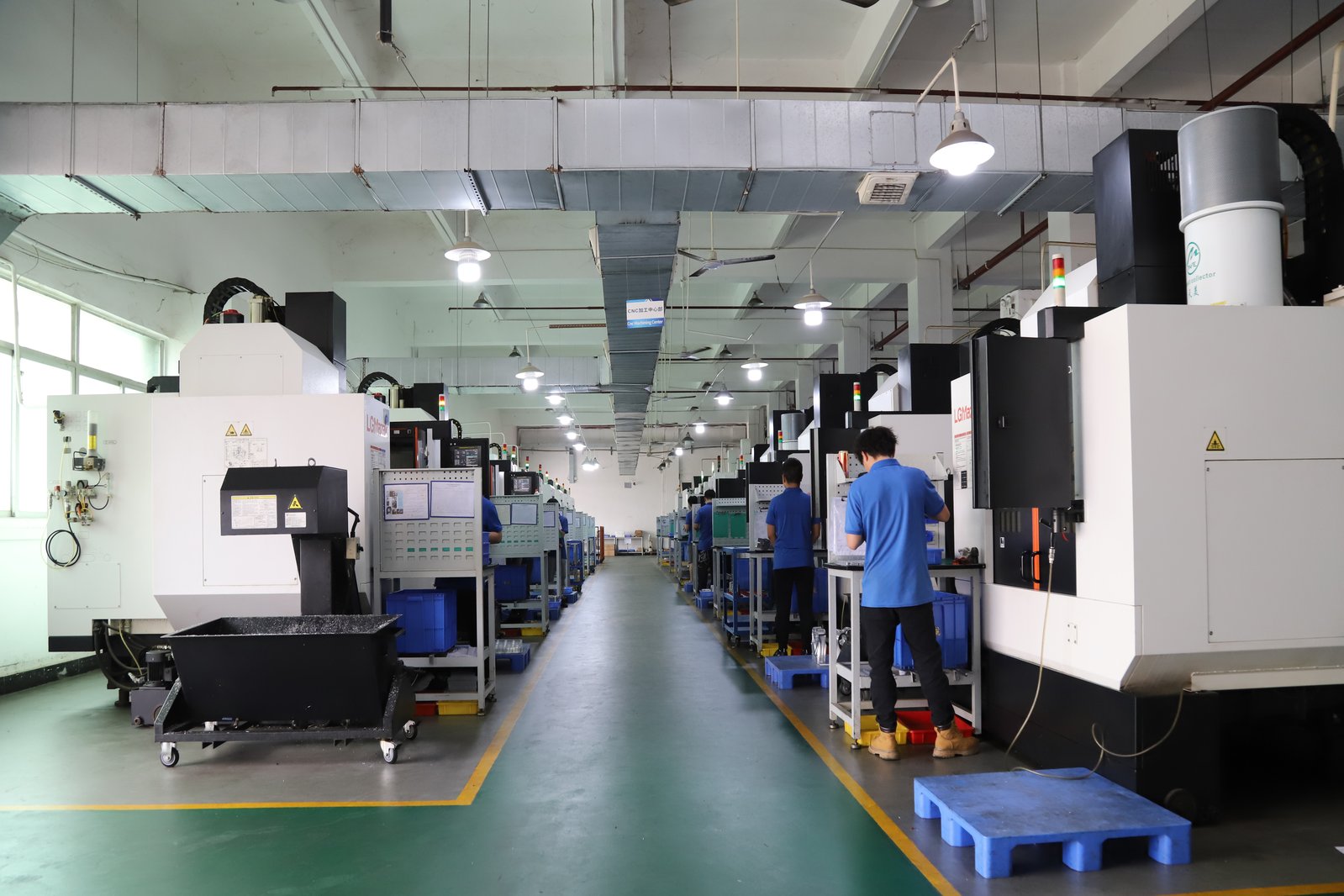
Aluminum is the metal whose machining economics change most dramatically with volume, because the metal is cheap, fast, and easy to form, every volume tier has a different cost structure and a different competitor. At one piece, the cost is dominated by the setup and the program; at a thousand, by cycle time and process control; at ten thousand, aluminum parts stop being CNC parts at all, because the volume has justified a die, and the CNC company's role shifts from making the part to finishing and machining the part that casting or extrusion produced. Understanding where your order sits on that curve — and where the curve breaks — is the difference between paying the right price for your quantity and paying the wrong metal's price. This guide covers aluminum machining from the volume-economics side: what the cost curve looks like specifically for aluminum, where setup cost bites hardest and how to design around it, when volume justifies tooling instead of CNC, how batch processes like anodizing shape the order quantity, and how the second order changes the economics.
What does the aluminum cost curve look like from one piece to ten thousand?
Aluminum's cost curve has three distinct regimes, and knowing which regime your order sits in tells you what you are actually paying for:
- One to a few dozen parts — the setup-dominated regime. The program, the fixture, and the first-article verification dominate the cost, and the per-part price is essentially the setup divided by a small number. Because aluminum cuts fast, the cycle-time share is unusually small, which means the setup share is unusually large, and the cost of a small aluminum order is more concentrated in engineering and setup than it is for any other metal.
- Dozens to a few thousand — the CNC-optimal regime. The setup amortizes, the cycle time becomes the driver, and aluminum's fast cutting makes this the regime where CNC aluminum is most efficient: short cycle times, low material cost, and no tooling to amortize. This is the heartland of machined aluminum, and it is where the metal's economics are best.
- Thousands and beyond — the tooling regime. At sufficient volume, aluminum's formability turns against CNC: die casting, extrusion, and stamping amortize their dies across the volume and undercut machining's per-part cost. The crossover for aluminum parts comes earlier than for steel or titanium parts, because aluminum is easy to cast, easy to extrude, and cheap enough that the die cost is recovered quickly. Above the crossover, the CNC company's role changes — from making the part to machining the cast or extruded blank to final tolerance, adding the precision that the as-formed shape cannot hold.
The buyer-side map: know which regime your quantity sits in, because each regime has a different cost structure and a different right answer. The order that is priced like a high-volume part but sits in the setup regime is paying for volume economics it is not getting; the order that sits in the tooling regime and stays on CNC is paying machining prices for a part a die could make cheaper.
Where does the aluminum setup cost bite hardest, and how do you design around it?
Because aluminum's cycle times are short, its setup cost is proportionally the largest of any common metal, and the design decisions that reduce setup are the ones that move a small order's price most:
- Setup cost follows the number of operations and setups, not the part's size. Each operation — each machine, each fixture, each orientation change — adds setup time. A design that consolidates features into fewer operations, and fewer setups, directly cuts the cost that dominates a small aluminum order.
- Fixturing is where setup time hides. A part that needs a custom fixture costs the fixture design and the setup to use it; a part that can be held with standard soft jaws or a simple workholding strategy costs a fraction. The DFM conversation that simplifies the holding strategy is worth more on a small aluminum order than on any large one.
- The program is a setup cost that repeats on every revision. On a small order that may change, each revision is a program delta with its own setup, which is why revision discipline (changes scoped against the existing program) is a cost lever at the quantities where aluminum custom work happens.
- The first article is part of the setup economy. The verification of the first part is a setup-stage cost, and on a small order it is a large share of the total. A design that is DFM-clean on the first pass saves the first-article iterations that a small order cannot amortize.
The design principle: on a small aluminum order, the price is set by the setup — operations, fixtures, programs, and first-article iterations — and the design choices that reduce setup are the order's biggest cost lever. The DFM review that simplifies the process is worth more on a ten-piece order than on a ten-thousand-piece one.
When does aluminum volume justify tooling instead of CNC, and when does CNC still win?
The aluminum crossover from machining to tooling is earlier than for other metals, and the decision has a clear structure:
- Die casting wins for complex hollow shapes at volume. Housings, enclosures, and components with internal features that machining would carve from solid are die-cast at volume — the die cost is recovered across the run, and the as-cast shape is near-net. The crossover for these parts comes at modest volumes, because aluminum die casting is fast, cheap per part, and dimensionally good enough for many features.
- Extrusion wins for constant cross-sections. Any part that is essentially a profile — heat sinks, rails, channels — is a candidate for extrusion, where the die is inexpensive and the running cost is very low. The crossover is early, and CNC enters only for the end machining, holes, and features the extrusion cannot carry.
- CNC still wins where the tooling cannot deliver. Precision features the die cannot hold, low to medium volumes that never recover the die, materials and tempers that are not castable or extrudable, and the machining of cast or extruded blanks to final tolerance — the CNC company's role at volume is not displaced by tooling; it is redefined as the finishing process that gives the formed part its precision.
- The break-even is a calculation, not a rule of thumb. The crossover point depends on the die cost, the per-part cost difference, and the run length, and it is worth calculating for any part that might grow past a few thousand pieces. The part that stays machined because its volume never justifies a die is a CNC part for life; the one that crosses the break-even should be re-routed to tooling with CNC finishing long before the buyer keeps paying machining prices.
The routing principle: on aluminum, volume is destiny — the quantity determines whether the part is made by machining, by tooling, or by tooling plus machining. The buyer who models the crossover before the volume arrives routes the part to the right process at the right time; the one who discovers it after paying machining prices for years has been overpaying by the difference between the two processes.
How do batch processes — anodizing especially — shape the aluminum order quantity?
Aluminum's finish processes are batch processes, and their economics pull the optimal order quantity in a direction the machining curve alone does not show:
- Anodizing runs in batches with batch economics. A coating line processes parts in loads — a small order may wait for a batch to fill, pay a minimum charge, or carry a per-load cost that is large relative to the parts. The finishing line of a small aluminum order can rival the machining line, which is a fact of the process, not a markup.
- The order quantity should make the finishing batch economic. The optimal aluminum order size balances three pulls: the machining setup amortization (favoring larger orders), the anodizing batch economics (favoring orders that fill or share a load), and the inventory cost of parts you do not yet need (favoring smaller orders). The quantity that minimizes all three is the economically right order, and it is often larger than the quantity that minimizes machining alone.
- Color and appearance add their own batch logic. A part that must match a color standard needs its coating from a controlled batch with a color reference, and the color-matching constraint can force a minimum order or a shared batch that the machining economics alone would not demand.
- Consolidation across parts is the small-order answer. Where no single part fills a finishing batch, combining several aluminum parts into one coating load amortizes the batch cost across the combined value — the same consolidation logic that freight economics teaches, applied to the finishing line.
The quantity principle: an aluminum order's right size is set by the intersection of the machining curve and the finishing batch economics, not by either alone. The buyer who models the finishing line into the order quantity avoids the small-order trap where the coating costs more than the machining, and the buyer who consolidates parts into shared batches keeps small orders economic.
How does the second order change the aluminum economics?
Aluminum orders rarely happen once — the part ships, the product sells, the design matures — and the second order is where the real economics of a CNC relationship appear:
- The program and fixture are assets that amortize on the second order. The engineering and setup that dominated the first order are already paid; the second order reuses the program, the fixture, and the process, and its price reflects only the incremental work. The second order is where the buyer sees the difference between a supplier who preserved the process state and one who treats every order as fresh development.
- Process control replaces first-article heroics. By the second order, the process has history — capability data, inspection records, known characteristics — and the verification shifts from proving the first part to confirming the run stays in control. The second order's economics are the economics of a proven process, which is what the first order was paying to establish.
- Volume tiering applies to the relationship, not just the part. A buyer whose orders grow from tens to hundreds to thousands is moving along the volume curve with the same supplier, and the supplier's ability to scale the process, the finishing, and the documentation with the volume is the relationship's real test. The supplier that grows with the volume keeps the aluminum economics on the buyer's side; one that does not grow with it forces a re-quote against the tooling crossover at the worst moment.
- The repeat order is where finish consistency proves itself. Anodized parts across orders must match — same coating class, same color — and the second order tests whether the finishing process is controlled enough to reproduce the first. The supplier whose batch-to-batch finish is consistent is the supplier whose relationship compounds; one whose finish drifts is a supplier whose second order starts a color dispute.
The relationship principle: the first aluminum order buys the process; the second order collects it. The supplier who preserves the program, proves the process, and scales the finish consistency across orders is the supplier whose aluminum economics improve with every reorder, which is the entire point of choosing a CNC company rather than buying a part.
How do you choose the order quantity that fits the aluminum economics?
The quantity decision ties the curve, the tooling crossover, the finishing batch, and the reorder economics together, and it runs on four questions:
- Which regime does the part sit in at this quantity? Setup-dominated, CNC-optimal, or tooling territory — the regime tells you what the price is made of, and whether the quantity is the right one for the process.
- Does the quantity justify tooling, and when will it? The break-even with die casting or extrusion should be calculated before the volume arrives, so the route changes at the crossover rather than years after it.
- Does the quantity make the finishing batch economic? The anodizing load, the color-matching constraint, and the consolidation options — modeled into the quantity so the coating does not dominate the price.
- What does the second order look like? The supplier's ability to reuse the program, prove the process, and reproduce the finish across orders — the relationship economics that determine whether the price falls with every reorder or starts over.
The decision principle: the right aluminum order quantity is the one that sits inside the CNC-optimal regime, stays clear of the tooling crossover until the volume truly justifies it, makes the finishing batch economic, and sets up a second order that costs less than the first. A quantity that does all four is the quantity the aluminum economics reward; one that fails any of them is paying a regime's price without its benefits.
Frequently Asked Questions
Why does a small aluminum order cost so much per part?
Because it sits in the setup-dominated regime: the program, fixture, and first-article verification dominate the cost, and because aluminum cuts so fast, the setup share is unusually large — the per-part price is essentially the setup divided by a small number. The design choices that reduce operations, fixtures, and first-article iterations are the small order's biggest cost lever.
When does aluminum volume justify die casting or extrusion instead of CNC?
When the volume recovers the die: complex hollow shapes like housings favor die casting at volume, and constant cross-sections like heat sinks favor extrusion, because aluminum is easy to form and its die costs recover quickly. The crossover is a calculation based on die cost, per-part difference, and run length, and above it, CNC's role shifts to machining the formed blank to final tolerance.
Why is the anodizing line so expensive on a small order?
Because anodizing is a batch process: a small order may wait for a batch to fill, pay a minimum charge, or carry a per-load cost that is large relative to the parts. The right quantity balances the machining setup amortization against the finishing batch economics and the inventory cost, and consolidating several parts into one coating load keeps small orders economic.
How much cheaper is the second order of the same aluminum part?
It should be meaningfully cheaper, because the program and fixture are assets that amortize — the second order reuses them and pays only the incremental work. The second order is where you see whether the supplier preserved the process state or treats every order as fresh development, and it is where finish consistency across orders proves itself.
What quantity of aluminum parts should I order?
The quantity that sits inside the CNC-optimal regime, stays clear of the tooling crossover until the volume justifies it, makes the finishing batch economic, and sets up a cheaper second order. Model the machining curve, the finishing batch, and the reorder economics together — the quantity that balances all three is the economically right one.
What is the minimum order quantity for aluminum CNC machined parts?
One piece, which is the entry point to the whole volume curve: the first part establishes the program and the process, the first article verifies the design, and every subsequent order rides the setup that the first one paid to build. MOQ 1 is how the aluminum economics begin, not where they end.