
5-Axis CNC Machining Company Economics: When the Axis Upgrade Pays for Itself at Your Quantity
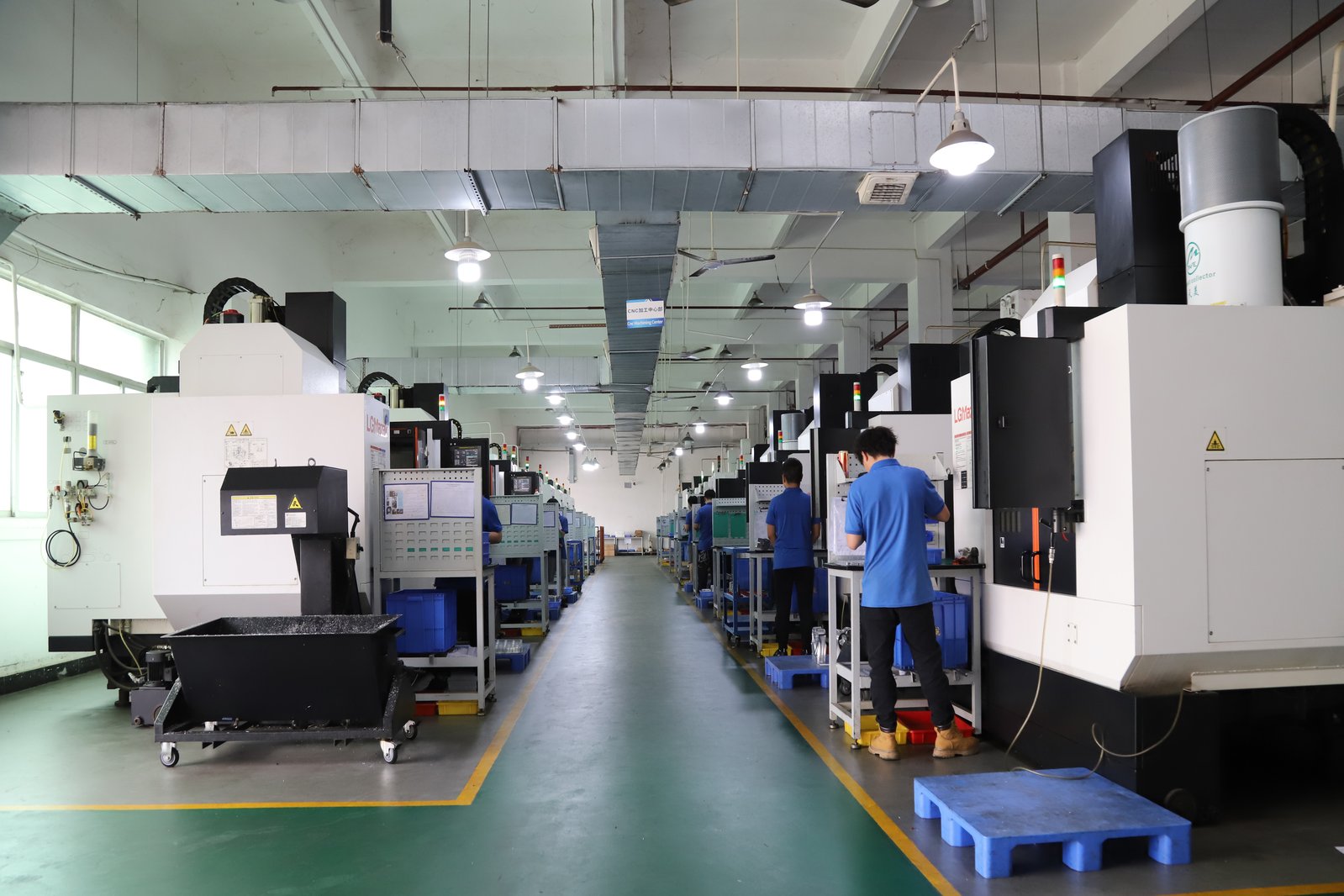
The 5-axis decision is usually framed as a geometry question — does the part need five faces machined in one setup?, but on a machining company's cost curve it is a quantity question first. Every re-fixturing step that a 3-axis process adds to a part happens again on every unit of the batch: flip the part ten times for a prototype and you have handled it ten times; flip it ten times for a production order and you have handled it ten thousand times. The 5-axis machine removes those repetitions at the price of a higher fixed cost — programming, simulation, workholding, and first-article verification that do not shrink with quantity. The two cost structures cross at a quantity that is different for every part, and the buyer who chooses the axis before computing that crossover is choosing by habit rather than by economics. This guide covers the volume economics of 5-axis machining from the buyer's side: why the decision moves with quantity, where the re-fixturing cost compounds, what the program asset is worth on later orders, how verification scales, and what to compare before committing a part to five axes.
Why is the axis a quantity decision rather than a geometry one?
Every machining process is two curves stacked: a fixed layer that is paid once per order, and a variable layer that is paid once per part. The axis choice changes the shape of both layers, which is why the right answer slides along the quantity axis instead of staying fixed.
- 3-axis plus multiple operations is a low-fixed, high-variable process. The program is short and the fixtures are simple, so the fixed layer is small, but each additional operation adds handling, re-fixturing, and alignment risk that repeat on every unit. The variable layer carries the cost of the part's geometry, multiplied by the number of setups the geometry demands.
- 5-axis is a high-fixed, low-variable process. The program, the simulation, the workholding strategy, and the first-article verification are substantial — the fixed layer is large. But the part is machined in one or two setups, so the variable layer carries fewer handling steps per unit. What 5-axis buys is a lower slope on the curve that quantity multiplies.
- The crossover is a quantity, not a preference. At one piece, the 3-axis route is usually cheaper: its small fixed layer is paid once, and a few extra handling steps cost little. At ten thousand pieces, the extra handling steps are paid ten thousand times, and the 5-axis route's higher fixed layer is spread across a large batch. Between those extremes sits the crossover where the curves cross, and it moves with the part's geometry, the number of operations it needs, and the shop's rate structure.
- The buyer's error is fixing the axis before fixing the quantity. Choosing 5-axis because the part "looks complex," or 3-axis because "it worked for the prototype," skips the only question that matters: at the quantity on the order, which curve is lower? The same drawing can justify different axes at different volumes, and the honest machining company computes the crossover rather than defending a machine it prefers to run.
The quantity frame: the axis is not a property of the part; it is a property of the part at a quantity. A drawing sent with a volume is a different economic object than the same drawing sent without one, and the axis recommendation should change with the number on the order.
How much does re-fixturing really cost once the batch grows?
The re-fixturing cost of a multi-operation 3-axis job is easy to underestimate at low volume because it hides inside the setup: a flip here, a re-indicate there, a deburr step between operations. At volume those steps stop hiding — they multiply by the batch, and they carry three kinds of cost that grow with the count.
- Handling time is a linear cost that quantity exposes. Every time a part moves between operations — unclamp, clean, flip, re-clamp, re-indicate — the shop pays minutes that are added to every unit. A part that needs five operations pays that handling five times per unit, and the total grows in direct proportion to the batch. At prototype quantities the minutes are noise; at production quantities they are a cost line worth a machine upgrade.
- Every re-fixturing is an opportunity to lose alignment. Each re-clamp re-establishes the part's position from scratch, and each re-establishment is a chance for the tolerance relationships between features to drift. The drift risk is not multiplied by the batch in the same linear way as handling time — it is a failure probability that repeats on every unit, and at volume a small per-unit probability becomes a predictable number of bad parts per batch.
- Fixtures, deburr stations, and inspection points scale with the operation count. A five-operation 3-axis job needs five fixture designs or a flexible fixture system, deburr between operations, and inspection after each setup that touches a critical feature. Those are fixed costs of the 3-axis route that do not amortize as gracefully as the 5-axis program, because they are tied to the operation count rather than to the part.
- The tolerance story favors the single setup as the batch grows. Features machined in one setup carry their relationships from the machine's own geometry; features machined across setups carry them from the accuracy of each re-clamp. The single-setup advantage is a quality margin that becomes more valuable as more parts depend on it — the same feature that passed on one prototype has to pass on every production unit.
The compounding frame: re-fixturing is not a setup cost — it is a per-unit cost wearing a setup costume. At one piece it is charged once and looks like setup. At ten thousand pieces it is charged ten thousand times, and that is the number that decides the axis.
What is the 5-axis program worth when the first order ends?
The 5-axis route's high fixed layer is concentrated in assets that do not vanish when the first order ships: the program, the simulation, the workholding concept, and the first-article baseline. Those assets are the reason the second 5-axis order is a different economic event than the first, and the reason the axis decision should be made with the second order in view.
- The program is a digital asset with a near-zero reproduction cost. Writing tool paths for five-axis work is the largest single fixed cost of the route, and once written and proven, it can be re-run, revised, and re-issued without being re-written. The first order pays for the program; every later order of the same part draws on it.
- The simulation and workholding survive the batch. The collision-checked simulation, the fixture concept, and the setup instructions are kept with the job file. A reorder does not re-learn the part's fixturing; it re-sets the same workholding from the same design, which is why the second run starts closer to the cycle-time floor.
- The first article becomes the baseline for the whole part history. The measured first article proves the program against the drawing, and its report becomes the reference that later batches are judged against. The baseline is an asset of the part's history — it carries forward only if the same supplier keeps the job file, which is why changing suppliers between orders discards more than the part's price.
- The second-order discount is larger on 5-axis work than on 3-axis work. Because the fixed layer is larger, the share that the second order avoids is larger too. A part whose first order was dominated by programming and simulation can see a substantial drop on the reorder — the drop is the program asset being amortized instead of re-purchased.
The asset frame: the 5-axis program is the one cost in machining that behaves like software — expensive to write once, nearly free to reproduce. The buyer who treats the first 5-axis order as the part's permanent price is ignoring the asset that later orders inherit; the buyer who keeps the supplier keeps the asset.
What does batch size do to five-axis verification?
Verification on 5-axis work follows a different curve from verification on multi-operation 3-axis work, because the geometry being verified is different: the critical relationships live on machined-in-one-setup surfaces, and the inspection strategy follows the geometry.
- The first article on 5-axis work is comprehensive, and worth it. The first part out of a new five-axis program earns a full inspection: the surfaces, the relationships between them, and the features that the single setup was supposed to hold. That inspection is part of the fixed layer, paid once, and it validates the program that every later part will be made with.
- Batch verification on 5-axis work can sample more lightly per part. Because the tolerance relationships are established by the machine's geometry in one setup, rather than re-established at each re-clamp, the per-part verification burden on repeat batches is lighter. The process capability demonstrated on the first article — the repeatability of the single setup — is what lets later batches sample rather than fully re-measure.
- Complex-surface inspection scales with the feature, not the batch. A sculpted surface or a compound angle that needs scanning or a CMM program carries a verification cost per feature type, established once and applied per batch. The cost concentrates in the setup of the inspection itself, which quantity spreads rather than multiplies.
- The verification saving compounds with the setup saving. A 3-axis five-operation job verifies after each operation that touches a critical feature — five verification events per part at volume. The 5-axis single-setup job verifies the finished geometry once. The inspection cost of the multi-operation route is another per-unit line that quantity exposes, and another reason the crossover moves as the batch grows.
The verification frame: 5-axis work front-loads its inspection into the first article and the process baseline, then carries lighter per-part verification on repeat batches. At volume, that distribution is strictly better than paying a verification event after every re-fixturing — the machine's geometry is verified once, instead of every flip being re-proven.
What does a kept program do to the reorder price?
The axis crossover computed on a first order is not the crossover on a second order, because the two orders sit on different cost structures. A buyer comparing 3-axis against 5-axis on first-order quotes alone is comparing two processes that both carry their full fixed layers; the comparison that matches production reality is a 3-axis first order against a 5-axis order that inherits a proven program.
- The first-order comparison punishes 5-axis for its program cost. On a first order, the 5-axis quote carries programming, simulation, and first-article verification in full, and the 3-axis quote carries its lighter fixed layer. The comparison looks unfavorable to 5-axis even where the per-unit handling savings would win at the order's quantity, because the program is charged as if it would never be used again.
- The reorder comparison rewards the program asset. When the same part returns to the same supplier, the 5-axis route reuses the program, the simulation, and the first-article baseline — the fixed layer largely disappears, and the quote approaches the cycle-time and material floor. The 3-axis route also improves on reorder, but its fixed layer was smaller to begin with, so its improvement is smaller too.
- The durable decision is made across orders, not within one. For a part that will be reordered — a production part, a service part, a part family with variants — the axis economics should be computed over the expected order history, not over the first purchase order alone. The 5-axis program is an asset that pays across the part's life; treating it as a cost of one order undervalues it.
- The supplier's job-file discipline determines whether the asset survives. The program and baseline only carry forward if the supplier keeps them — versioned, documented, and re-issuable. A supplier that treats each order as a fresh start charges the program cost repeatedly; one that treats the job file as an asset prices the reorder on the amortized base.
The reorder frame: the 5-axis crossover that matters is not the one on the first quote — it is the one across the part's order history. A part with a long life and a proven program can make five axes the cheaper route at quantities where a first-order comparison would say otherwise.
Which numbers settle the axis choice at a given quantity?
The axis decision is a comparison of cost structures at a specific quantity, and it can be made methodically before any machine is chosen. The comparison has four inputs, and the machining company that cannot produce them is quoting a preference rather than an economics.
- Compare the routes at your quantity, not at one piece. Ask for the 3-axis multi-operation route, the 4-axis route, and the 5-axis route priced at the quantity on the order, not at a prototype quantity scaled up by guesswork. The three quotes diverge as the quantity grows, and the divergence is the information the decision needs.
- Separate the fixed layer from the variable layer in each quote. The fixed layer — programming, fixtures, first article — is paid once and should be visible as its own line. The variable layer — cycle time, handling, verification per unit — is what quantity multiplies. A quote that hides the fixed layer inside the unit price prevents the crossover from being computed at all.
- Add the second order to the comparison. Ask what the reorder costs on each route with the job file retained. The difference between the first-order and reorder numbers is the value of the program asset on each route, and for 5-axis work it is the largest number in the comparison.
- Weight the tolerance and risk lines, not just the price lines. The single-setup route carries less alignment risk and fewer verification events per unit; the multi-operation route carries more handling and more chances for drift. At production quantities those lines are real costs even when they do not appear as line items — the buyer who ignores them is comparing prices, not economics.
The sourcing frame: the axis upgrade pays for itself when the handling, re-fixturing, and verification lines that quantity multiplies exceed the program and machine-rate lines that the first order carries. The buyer who computes that crossover at the real quantity — and across the real order history — chooses the axis the part actually earns, rather than the axis the first quote makes look cheap.
Frequently Asked Questions
Is 5-axis machining only worth it for complex parts?
Complexity matters, but quantity is the deciding variable. A simple part that needs five operations for features on multiple faces pays handling and alignment risk on every unit — at production quantity that per-unit cost can justify five axes even for a geometrically simple part. A complex part ordered once may be cheaper on 3-axis with multiple operations. The axis decision is the part's geometry at the order's quantity, not the geometry alone.
What does the first 5-axis order pay for that later orders do not?
Because the first order carries the program asset in full: tool-path programming, simulation, workholding development, and comprehensive first-article verification are all paid once. The reorder of the same part, from the same supplier, reuses that asset — the program is re-run rather than re-written, the fixture is re-set rather than re-designed, and the baseline is re-used rather than re-proven. The drop between the two orders is the program being amortized instead of re-purchased.
Does a 5-axis part need more inspection than a 3-axis part?
Different, not more. The first article of a five-axis program earns comprehensive inspection because it proves the program itself. Repeat batches can sample more lightly, because the tolerance relationships are established by the machine's geometry in one setup rather than re-established at each re-clamp. A multi-operation 3-axis part, by contrast, earns verification after each setup that touches a critical feature — more verification events per part as the operation count grows.
When does 5-axis become cheaper per part than 3-axis?
At the quantity where the per-unit handling, re-fixturing, and verification savings of the single setup exceed the higher fixed layer of the 5-axis route, spread across the batch. That crossover is different for every part — it depends on the operation count the geometry demands, the batch size, and the shop's rate structure. The way to find it is to ask for both routes priced at your quantity with the fixed and variable layers shown separately.
Should I keep the same supplier between 5-axis orders?
For the economics, yes. The program, simulation, workholding, and first-article baseline are assets of the part's history that only carry forward if the supplier keeps the job file. A new supplier re-writes the program and re-proves the process — the full fixed layer is paid again. The second-order saving on 5-axis work is larger than on 3-axis work precisely because the fixed layer is larger, and that saving is only available to the buyer who stays with the shop that holds the asset.
What if my quantity is still too small to justify 5-axis, but the part needs five faces?
Then the honest answer is usually a 4-axis or indexed route, or 3-axis with careful fixturing — the geometry gets machined at the quantity's economics. The part should be made correctly on the route the quantity justifies, and the program and fixture from that route should be kept so that if the part reaches the crossover quantity later, the move to five axes starts from a documented history instead of from zero.